Tag Archives: Really Rural Japan

Walking Tour Day 2: Hosokute to Ena

Writing a blog is harder work than you would think. Probably not as hard as being an influencer and having to pretend that your life is amazing and spend hours a day on videos and “content”, but you know, for instance, today is a day off and I have to get my hair cut, and plus, I’m reading a fun book (a REAL book, not on my kindle, which means I need light) and I could be doing that instead of blogging. BUT I want to do this, it is a hobby I greatly enjoy, and I also know that my mother and other people enjoy reading it, so here we go.

For previous posts about my trip in Japan in May/early June, click here–

Day 2: Hosokute to Ena

  • Distance: 12 miles or 19 km
  • Elevation Gain: 1125 feet or 350 m
  • Elevation Loss: 1650 feet or 500 m

Here is what the guidebook said about this hike:

“Time for a long and rolling hike. This 19km goes over the Biwa Pass with its amazing original Edo period cobblestones. After the ancient post town of Okute, it is time for the 13 passes. This long, rolling section gets quite meditative as it finally emerges in the town of Ena, formerly called Oi.”

I really enjoyed that paragraph. 13 passes though, that sounds like a lot! Let’s see how it went.

Day 2: Breakfast was at 7 am, so we were up and at ’em early. But we’d gone to sleep early, so it was actually a really restful night. We would need it! (spoiler alert, haha).

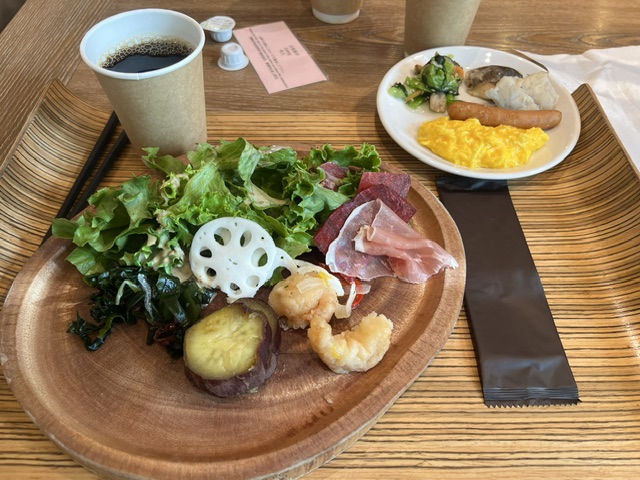
All kinds of good things for breakfast! I must say, (and maybe I already said this in a previous post, but!) I had worried that I wouldn’t like Japanese breakfasts, but it turned out that I adored them. I miss them! There wasn’t a single day in Japan that I wished I had a western style breakfast, I loved all the pickly bits, the slimy veggies, the salad for breakfast, the rice and miso soup. The only thing that I didn’t like was when we couldn’t get coffee, but that was rarely the case: Japanese people may not have loved coffee but they knew that we Westerners love it for breakfast, so it was usually on offer.

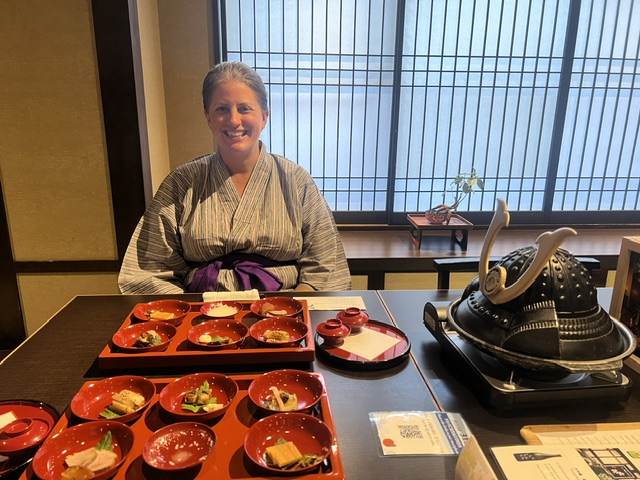
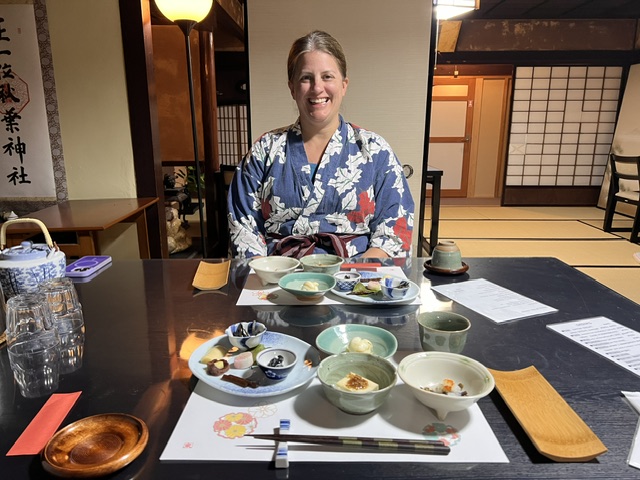
Wearing my yukata. The yukata is a robe that you are given to wear around the ryokan (traditional inn). I wore it over my pajamas in this case.

After breakfast we packed up and headed out. We left our suitcases to be transferred to the next stop, and we said our goodbyes to our hosts, the owners of the hotel. They were so wonderful, hospitable, friendly, and the food was SO GOOD.

A picture with Mr. and Mrs. Sakai from Daikokuya Ryokan.

Japan is known for its vending machines, but still we were surprised to see a tobacco vending machine.

A battery vending machine, how fun!

We walked on the road for about 5 km, which wasn’t my favorite. It wasn’t a busy road, so that wasn’t a big deal, but the road is hard on the feet! I was wearing some hiking shoes–honestly, I made some mistakes with my footwear, and it started with a toe injury in March, and I’m still figuring things out. This was a hard day, as my pinky blisters were acting up, and really nothing I could do seemed to help. But–

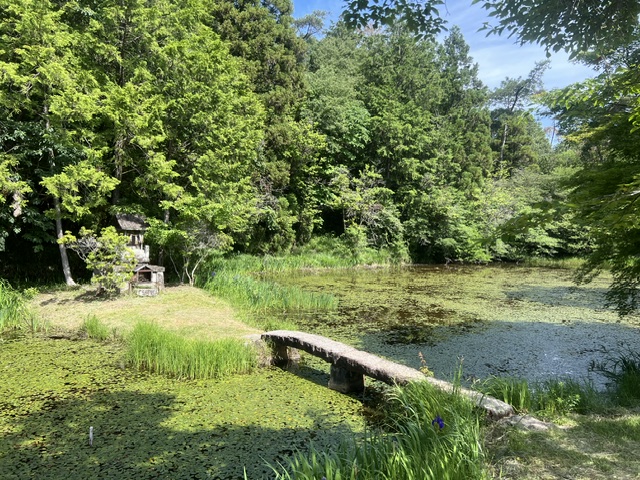
We passed by this lovely place. It is called Benzaiten-no-ike and is a shrine to Benzaiten, the goddess of all that flows including water, music, words, and time.

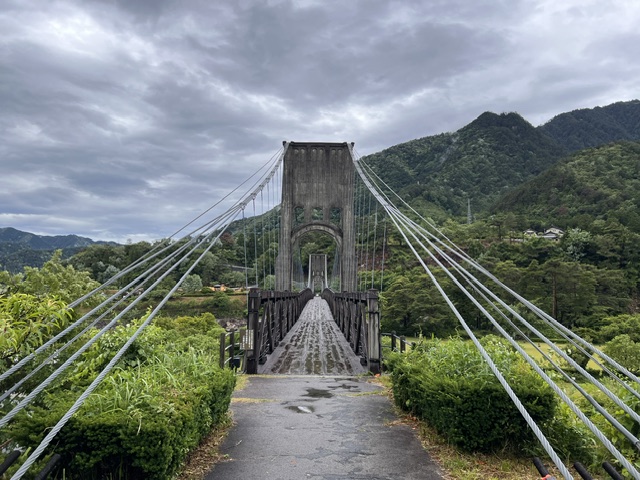
Louie walking across the bridge.

It was turning into a hot and sunny day, so we made sure to stay up on our sunscreen and water. We stopped for a little snack at one point and enjoyed some salty edamame snacks, which actually seemed to be like a pringles type snack, that was reconstituted into the shape of an edamame bean.

We saw some interesting and strange things on the trail, such as this snowman!

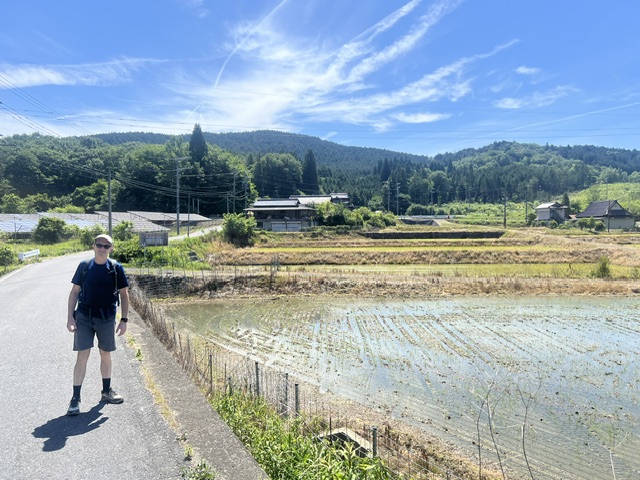
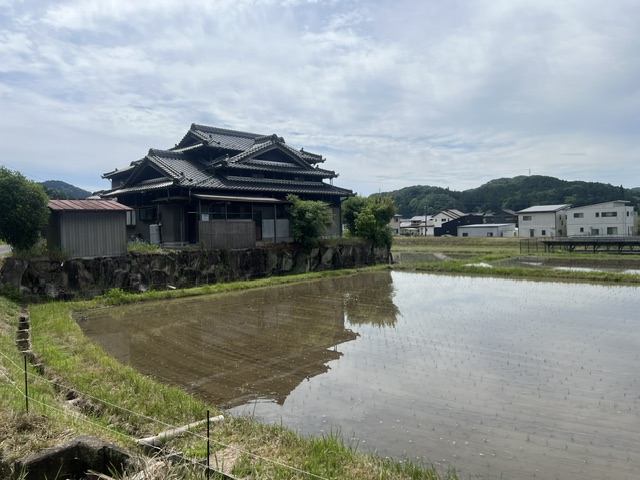
Oh hey, more rice paddies!

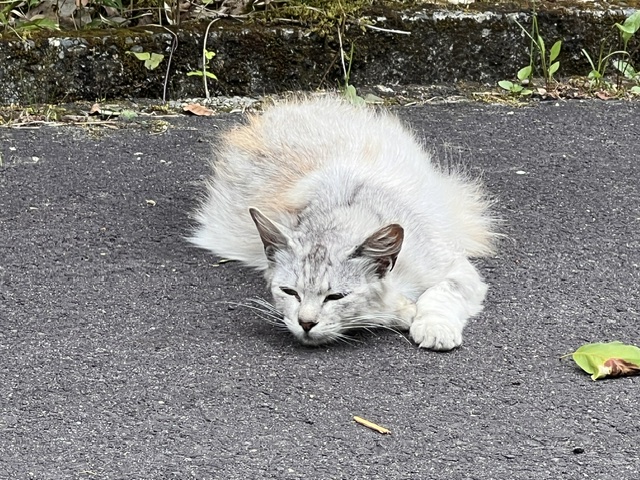
Finally the path turned to grass rather than a road, it was a true relief! We passed by a house with an amazing garden of various strange sculptures, lots of cats and frogs.

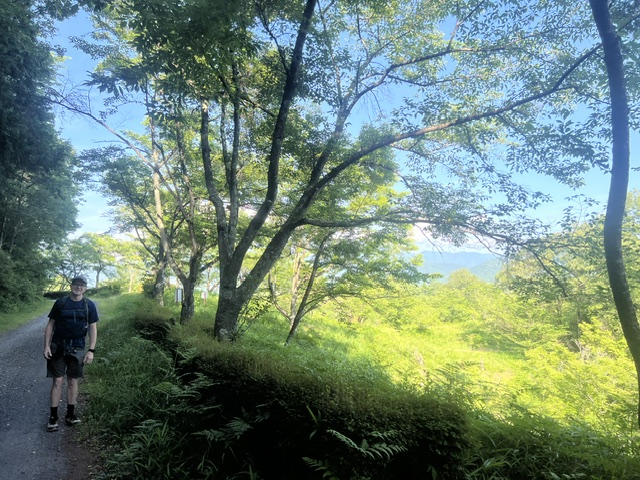
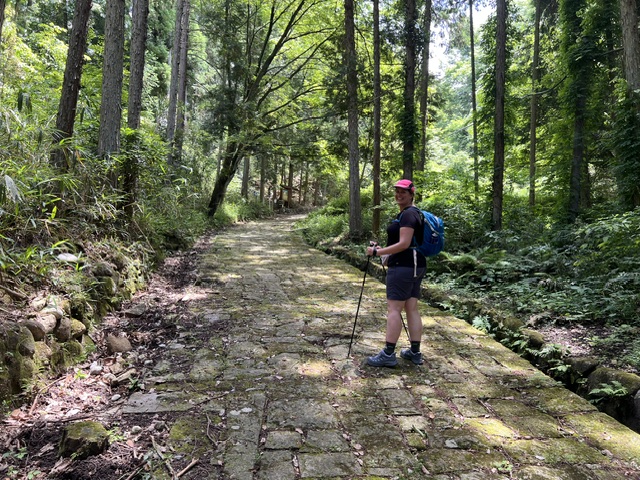
The trees and ferns and undergrowth was so pretty, we couldn’t resist a photo together.

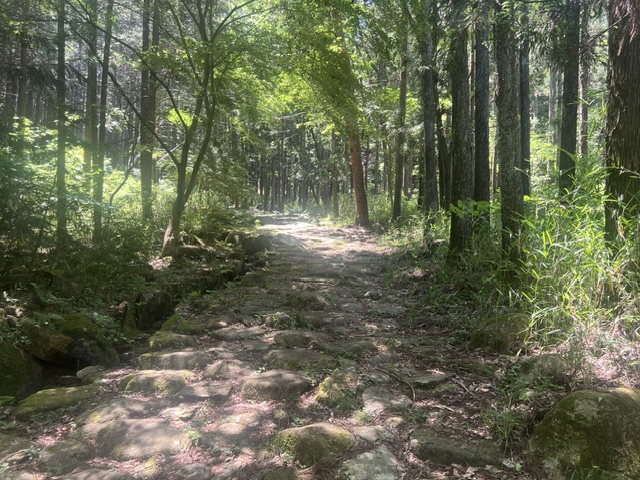
According to the guidebook, this stretch of the road is very much like it was in Edo period, and these huge ishidatami cobblestones were recovered in the late 1990s.

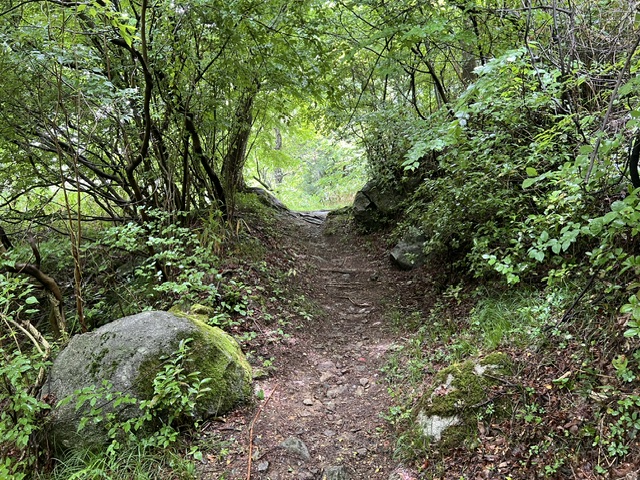
Nothing about the trail was that wild: people took good care of it, the shrines, the temples, and here, a bird house. But it was natural, and not busy, and we couldn’t get over how nice the air was.

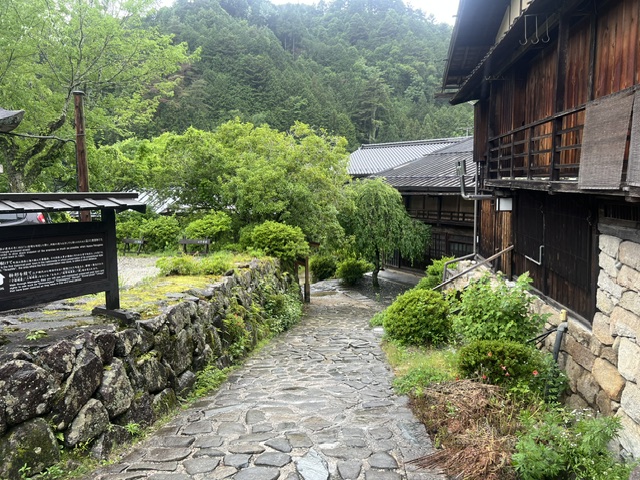
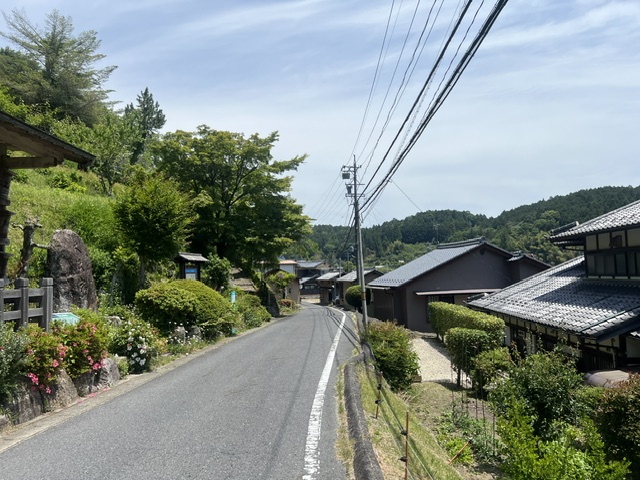
Then we entered the post town of Okute. We tried to imagine living in a tiny town like this. We were always struck by how LOVELY everything was, even in the country, the houses were well cared for and the gardens neat and tidy. We would see exceptions here and there, but for the most part the places we walked by and through seemed loved and respected.

This was the notice board for Okute. Travelers would find information and notices here, as well as the town people.

This was a very large stump from a very large tree! The tree was around 1300 years old and was struck by lightning in 2004 and slowly died after that. It sits in front of the Okute Shimnei Shrine.

We found ourselves in Marumori next, an old hatagoya (inn) which is now a museum. We were walking by and a few elderly people waved us in and insisted we sit down. I was fine with this! Then they offered us what I assumed would be a cup of tea, but it was actually a cup of soup, a bit of a shock! We had said our greetings using Japanese, and one of the people asked us how good our Japanese was. We laughed because the answer was, no, our Japanese is TERRIBLE. We spent 5-10 minutes there trying to converse with the one woman who spoke a little English and using hand gestures and such a lot. We were surprised that a tiny museum in a tiny town had 5-6 volunteers working, but maybe it would get busier later? Or maybe there just wasn’t much else to do!

Then we headed along the trail, waving goodbyes and with them all watching us. We immediately hit a “T” intersection and started pulling out our navigational aids to see what to do, and then all the people from the museum were motioning and calling out “right! right!” which was indeed correct. It was quite a moment of embarassment for us!

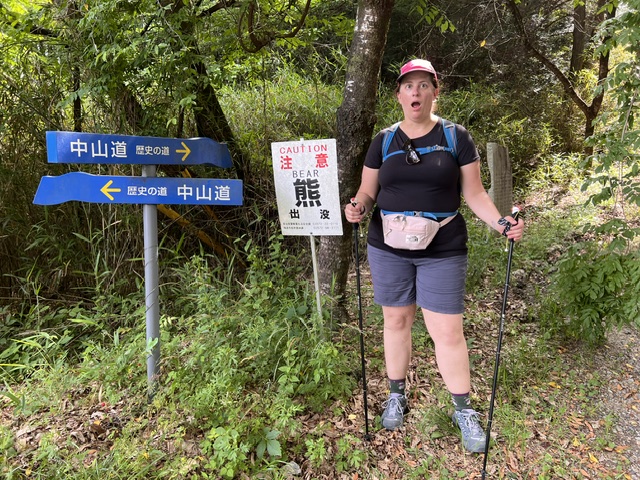
We entered the forest again, and saw this sign–watch out for bears, I assume!

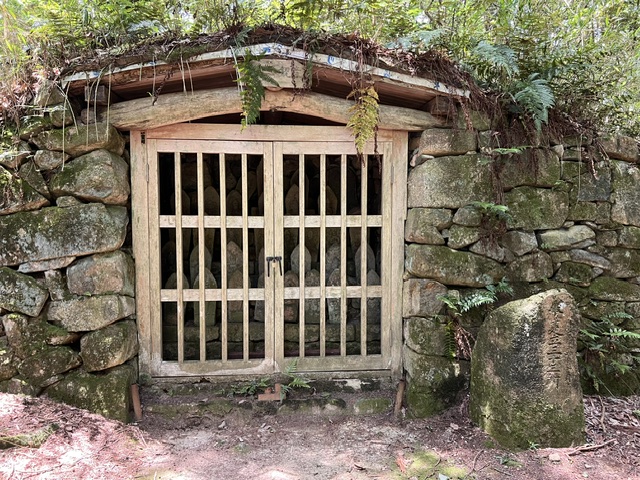
This was a cave with 33 horse-headed Bato-Kannon statues. These Kannon (part of Buddhism, I believe) offered protection for travelers and took donations in return. Often we would see coins outside of various shrines and temples, and it seemed that nobody bothered these coins, or stole them. Of course, we wouldn’t notice if the coins were all gone, would we? But again, it seemed that in Japan, people took pride in having nice things.

For lunch, we took a small break and enjoyed some onigiri (rice balls) that we had gotten that morning from the ryokan. We had some trouble finding a place to sit that wasn’t overrun with flies!

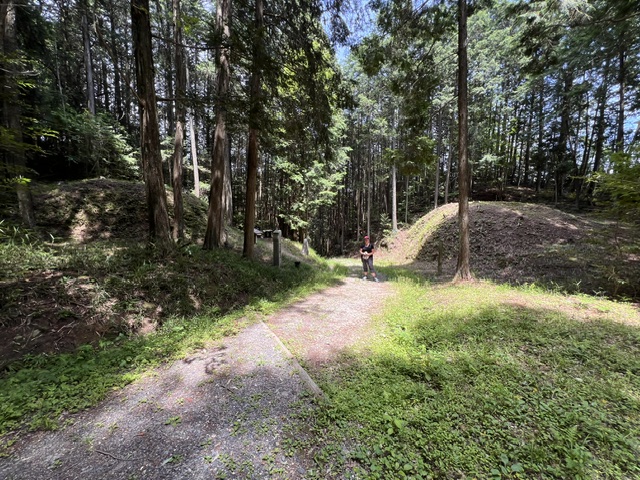
This is me standing between two mounds. These mounds were distance markings for ancient travelers, called ichi-ri-tzuka. A “ri” was the distance you could walk in an hour, so things were measured in ri. These mounds were originally built for every ri, which is about 2.44 miles, but most were demolished during the modernization of Japan. We definitely saw a few during our walks. (St Louis has its own history of mounds, so we felt right at home!)

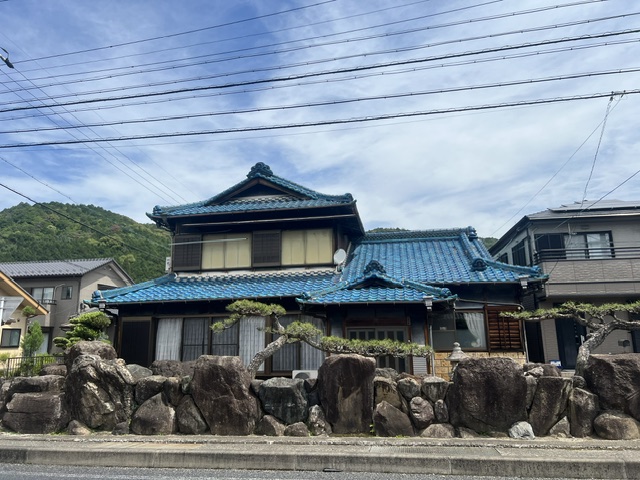
Some beautiful homes and gardens we walked by.

As the day went on, it got hotter, and we grew weary. We took some breaks and drank plenty of water, but I really just wanted something cold. And then, in the distance, we saw a vending machine…with cold drinks! Right by a bathroom as well, which was nice to use.

I should say a few things about the bathrooms on the trail: usually we had no trouble finding one–there were plenty around, or in the towns. We rarely had trouble finding them when we needed, and of course made sure to use them when they were available. Usually they were in excellent condition, sometimes only good condition, but rarely did they seem like public bathrooms in the States.

We saw some wildlife along the trail, but no bears.

A lizard!

Me below a huge electric tower.

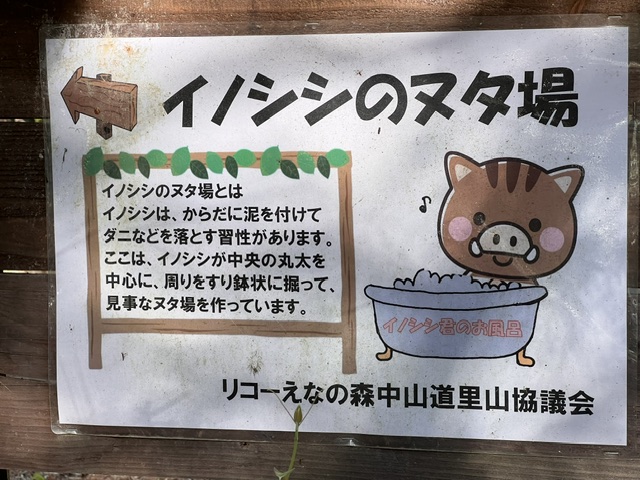
Very important signs, either that you need to bathe any pigs you come across, or that you need to bathe after petting pigs.

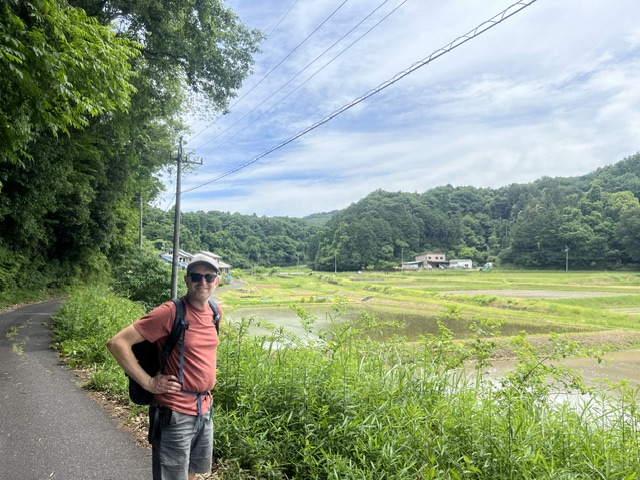
I don’t know why all my pictures of Louie are in the shadows, but for my excuse, I was exhausted and my feet hurt. You can see the mountains in the background.

As far as the 13 passes went, we didn’t count that many. We would go uphill and then downhill and some were obvious, nothing too terribly difficult, or at least if every step didn’t hurt they wouldn’t have been, but sometimes there would be a tiny uphill and we weren’t sure whether to count it. Either method of counting, I only made it to about 9 or 10, but as we finally started getting into the town of Ena, I knew we must have miscounted. Oh well!

The last mile or so of the walk was really tough, along a busier road in Ena, we were exhausted (well, I was, and maybe Louie was too, unsure!) and it was still hot and sunny. But we finally made it to the train station, where we would take a train from Ena to Nakatsugawa, our home for the night.

It was a short but painful walk from the Nakatsugawa train station to Onn Nakatsugawa where we were staying. We made it though, and it was a huge relief to take off my shoes at the hotel!

We freshened up, hitting the onsen, which was quite enjoyable. I was getting more used to the bathing (you sit on a stool and use a hand held nozzle to clean yourself thoroughly before getting into the bath, nude) though I noticed very few westerners seemed to be comfortable with the setup.

After freshening up, we went in search of dinner. Sadly I had to put shoes back on: note to everybody, BRING SANDALS. We found a wonderful izakaya a short walk from the hotel.

Not this place, though I do assume it was good, if it was around since 1953. Who doesn’t enjoy spaghetti and coffee?

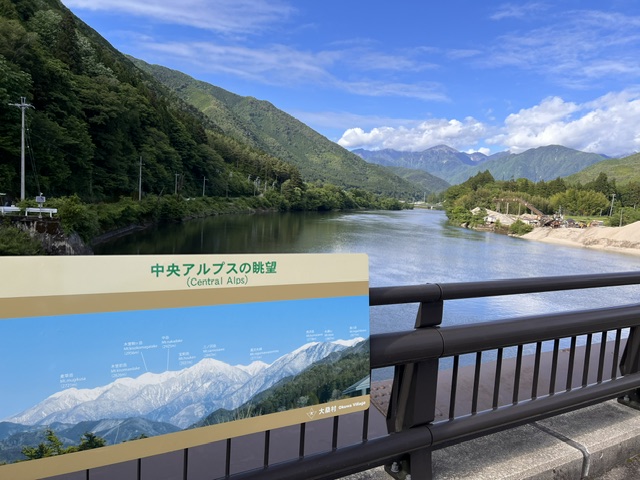
A lovely view of the river.

Look at us, all cleaned up!

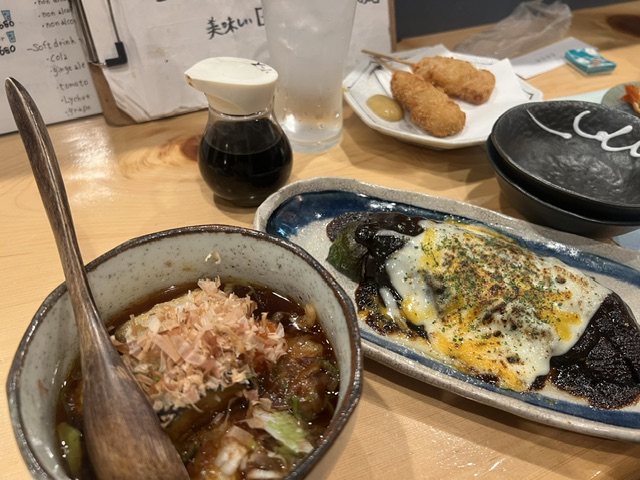
We sat at the bar, and enjoyed some drinks and bar food (that’s what an izakaya is, and you might be charge a seat fee, don’t panic). We also ended up chatting a bit with a friendly Japanese man who sat down by us, he was in a large group who he said were his colleagues on a business trip and enjoyed practicing his (very good) English and I think, talking to people who weren’t his colleagues.

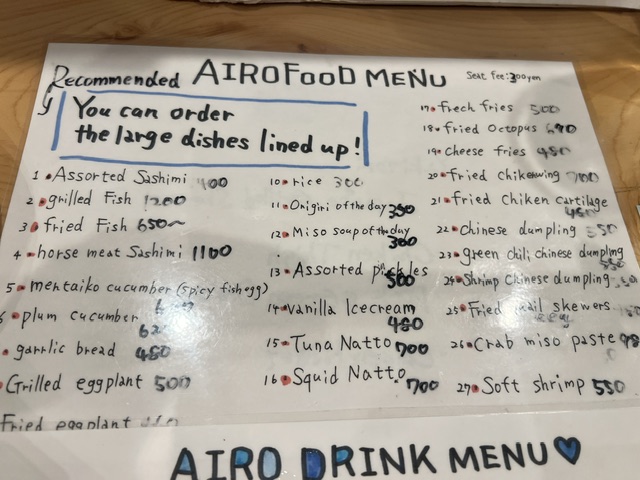
This is what they mean by the large dishes lined up, there were a variety of plates of food on the bar, which was great because you could see exactly how things were prepared!

We shared everything and enjoyed quite a feast! After a long day of walking, it was so great to sit and eat and relax. After dinner, we headed back and fell asleep easily.

Walking Tour Day 1: Mitake to Hosokute

I’m sorry for my delay in writing about this trip. Life hasn’t been that busy, but I have been busy enough…it’s also been challenging transitioning back into “regular life”. I finally caught up with photos enough to blog about some more of the Japan trip!

For previous posts:

Nagoya: Not boring at all

Starting off in Tokyo

Off to Kyoto on a very fast train!

Takayama for a few days

One Night in Inuyama

Day 1: Mitake to Hosokute

  • Distance: 7 miles or 12 km.
  • Elevation Gain: 1400 feet or 425 m
  • Elvation Loss: 400 feet or 120 m

So, we last left off at the Hotel μ Style Inuyama where we had spent the night. We got up early and Louie went to the onsen first, and then we had breakfast, which was fun. It was a big room, and there was a buffet set up with a variety of Japanese and Western food, but you first went through a line to have a salad made, with some choices on toppings. After you got the salad, you had unlimited choices as to what else you wanted to eat. We both made sure to eat a hearty breakfast as we had 7 miles or so of walking ahead of us!

After breakfast we packed up and headed down to checkout. We had our stuff organized with a carry on size suitcase and a hiking backpack for each of us. Our luggage would be transported to our next destination for the night, so we just had to leave it there. The front desk people seemed confused though, so I did message our company, Really Rural Japan to make sure everything was taken care of–they responded quickly that they called and it was all good. We also stopped at a Family Mart at the station to pick up snacks and lunch, as we were told there wouldn’t be many places to eat today. We got a few different sandwiches as well as some salty snacks and nuts.

We used our Suica cards to travel from Inuyama to the transfer stop, Shin Kani, but then grew worried that we would need a paper ticket for the next stop and wouldn’t have time to make it all work. We were very stressed by the time we got to the station, and then we quickly discovered that it was literally a 20 second walk between platforms, and the station master easily helped us scan out with our Suica card and then buy tickets–the whole procedure took less than one minute and we made the next train with no issues whatsoever.

We got off the train at Mitake, which was a very small station, with clean bathrooms…but you had to squat. And then it was time to get walking.

As the guidebook said, “You are about to get very rural, very fast.”

We were so excited! It was very different from being in a city already, the air was fresh, and we “only” had 7 miles ahead of us. Nothing to do today but walk. We had a guidebook with the written instructions as well as GPS routes through an app called Gaia, and it took a little while to get used to navigating.

I was a big nerd and had decided to use a belly bag to store things that I wanted easily accessible like my phone for pictures, a place for my sunglasses and a few other things. This worked out really well even though I look like a weirdo.

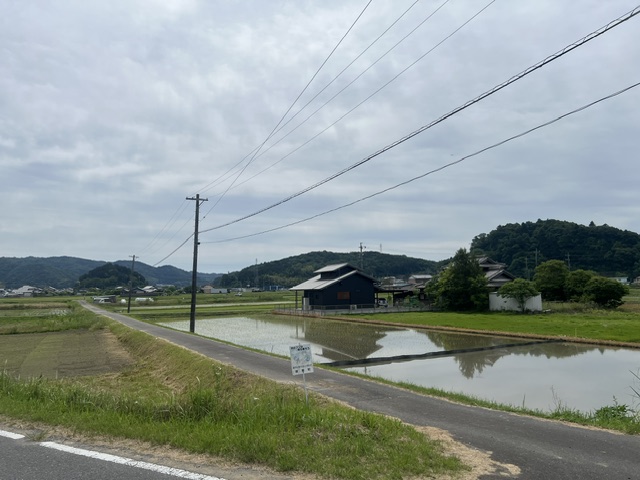
One of the first things we noticed was the rice paddies. They were everywhere! Sometimes people were working in them, but usually they were just there, you know, growing rice. I was surprised by this at first: I think I assumed there would be huge industries running the rice paddies like the corn farmers and dairy farmers here, but it seemed to be a lot of individual people growing their own rice, just as one here in the States might have a backyard garden.

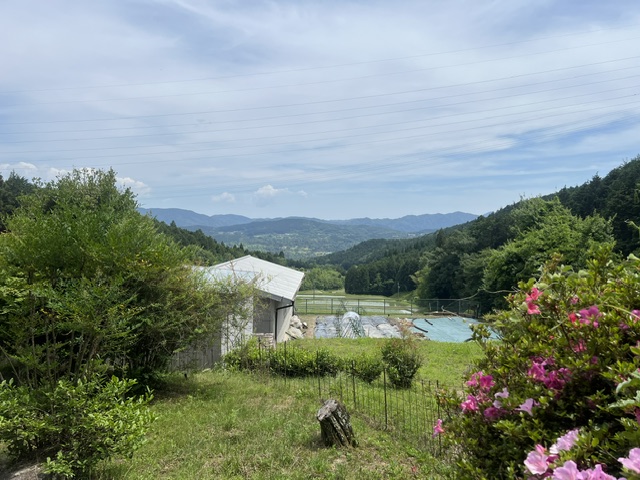
We walked along a road for awhile, maybe even the first mile, but finally we went off onto a grassy path instead. It was so lovely!

The road was less road-like in this picture.

We saw many many shrines and temples along the way, ranging from very tiny to larger.

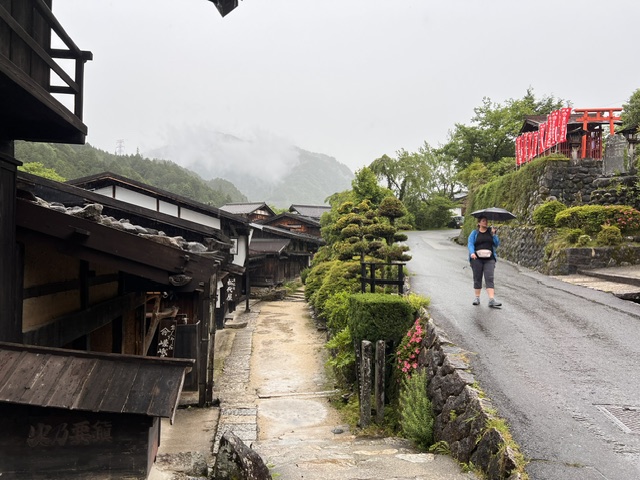
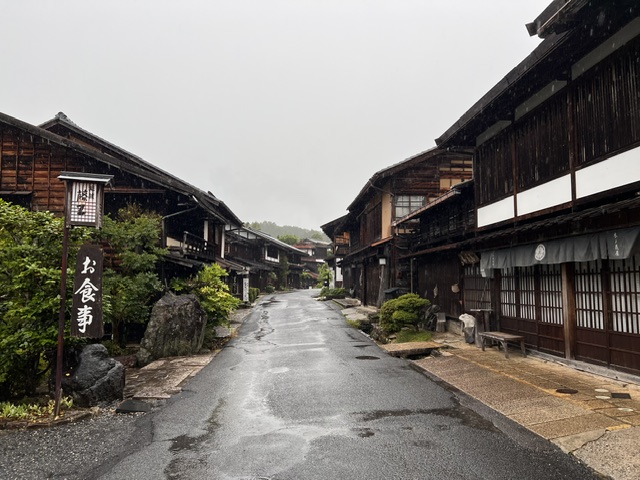
So, what is the Nakasendo Trail? It was originally a route from Kyoto to Tokyo (formerly known as Edo) and it went through 69 different little towns, called “Post towns” where travelers could sleep, eat and get information and supplies. We would be walking on the Nakasendo Trail for 5 days, so only a little bit of it, but doing what we were told was some of the most beautiful parts. The first two days would be parts that were less commonly walked and then we would be into a part that was walked quite a lot.

Bamboo Trees in the wild

We walked on various types of paths, paved, dirt, grass, and cobblestones.

Cobblestones were obviously the most scenic!

As we got closer to lunchtime, we also got closer to “La Province” which was advertised as a cake shop that we shouldn’t miss. We decided to first eat our sandwiches, so we stopped at a place called “Gotemba” for that, and it is “where Princess Kazunomiya rested on her journey to Edo to marry the 14th Tokugawa Shogun, Tokugawa Iemochi.”

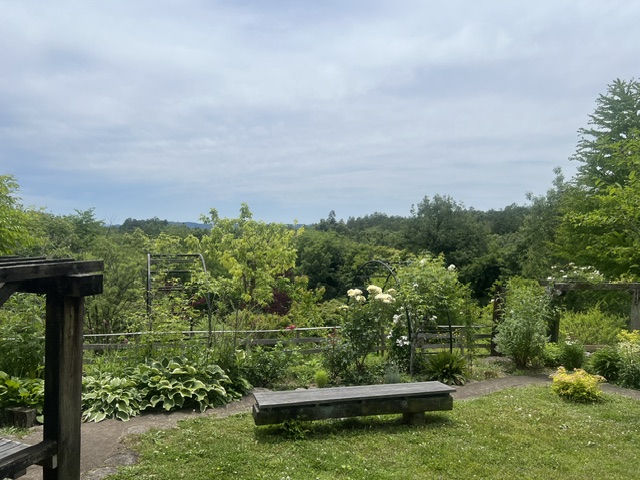
We were surprised to see that the cake shop was a French cake shop! It was an absolutely gorgeous setting, up on a mountain/hill with a great view, and a beautiful garden.

We ordered cakes and coffees, and were thrilled to sit down for a bit as well. They also filled up our water bottles with ice water for us, which we super appreciated.
There were more things I would have to liked to eat from the display case, but we didn’t want to make ourselves sick.

Louie got artsy with photos in the garden, haha. It was nice to relax and enjoy food for a bit, as well as freshen up in the bathroom a bit. We felt like we were a little dirty and sweaty for the place (you could also drive there) but no one seemed to mind.

Then it was back on the path! By now we were getting the hang of the navigation, Gaia worked best rather than trying to follow the written directions, and then there were plenty of blue signs that said Nakasendo, as well.

This was one of my favorite parts of the path for a bit: it was shady and downhill, hah! It looks like this part was about 3 km long, so you do the math on that.

These are Buddhist monuments along the way.

Watch out for bears! We did get a lot of warning about bears, and we had bells hanging from us that the company supplied to make a little noise as we went so that we wouldn’t sneak up on bears. Those signs are pointing the way to the Nakasendo Trail: we learned those characters soon enough!

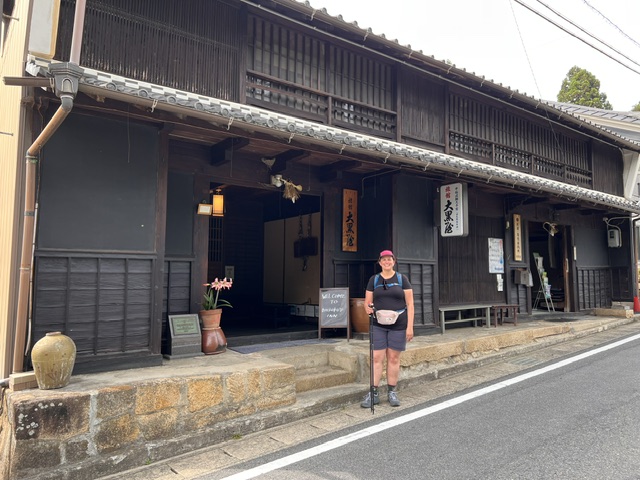
As the afternoon went on, I was getting more and more tired. The last few km were on a road in the sun, and I was exhausted… and then we saw it, our hotel for the night in Hosokute Juku, called Daikokuya Ryokan.

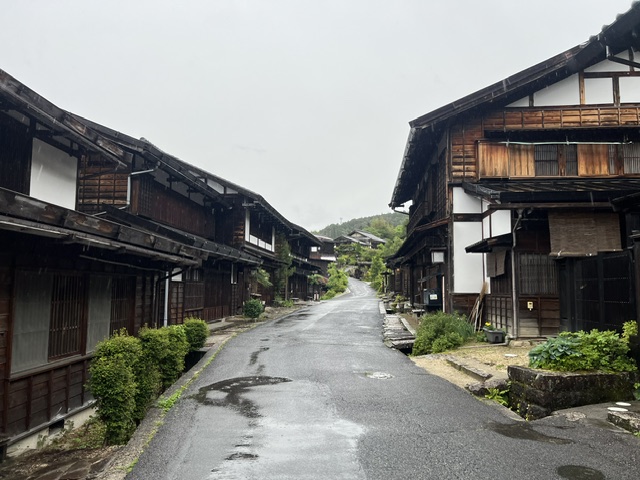
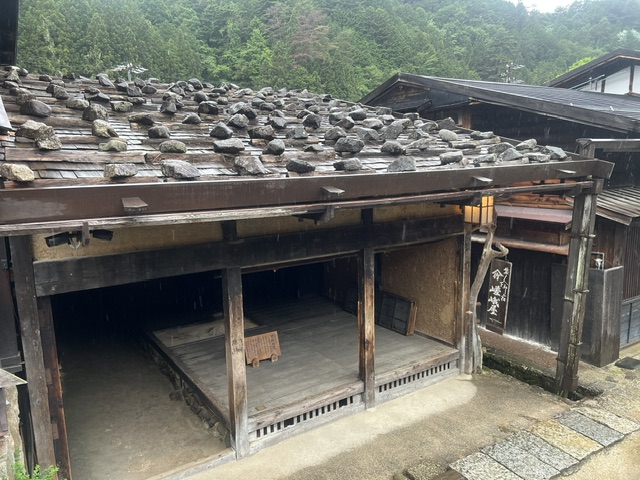
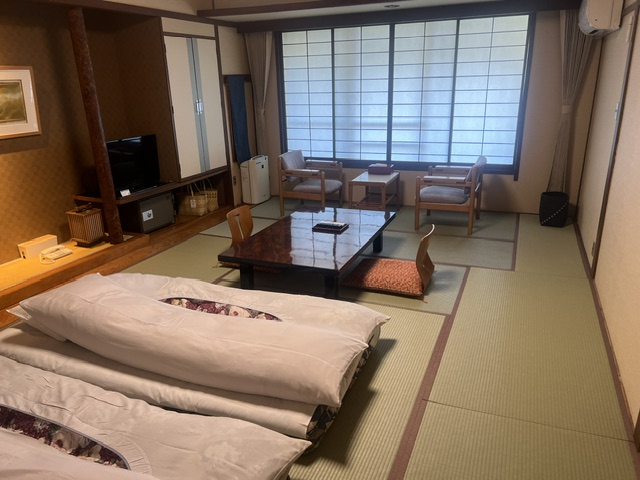
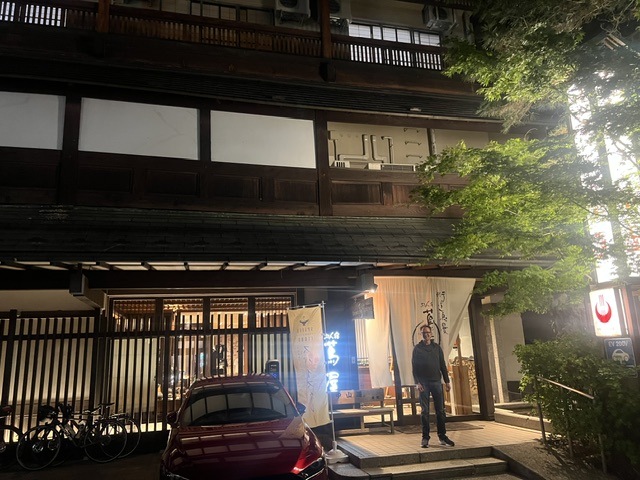
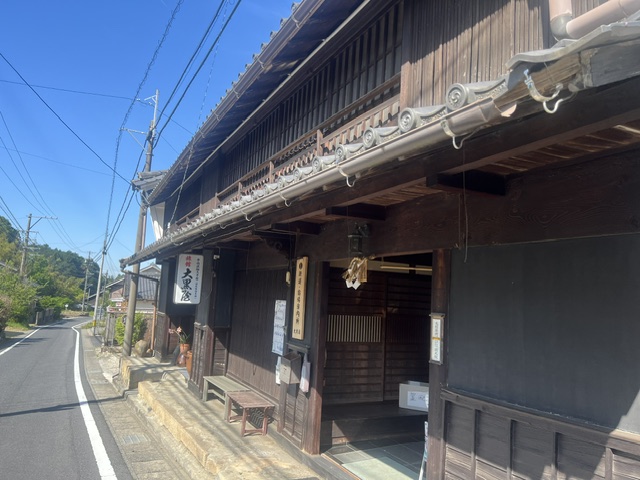
Louie took some pictures first, and as we were outside doing photographs, the owner came out to greet us. It was just past 3:00, so not the longest day, but it felt long! I was thrilled to take my shoes off and yes, our luggage had arrived. There has been an inn in this location for hundreds of years and has been passed down through many generations in the Sakai family. This building was built in 1859 to replace another one that burnt down in a fire. It is, as you can see, very traditional and inside there are tatami mats, sliding doors, and futons.

We loved it! It turned out that we had two large rooms to use: one for sleeping and one a sitting room, and though the bathrooms were down a flight of stairs, one bathroom was reserved for us and the other bathroom was for the other guest: yes, there were just three guests that night! We freshened up and lay down for a bit, there was wi fi as well so that we could send texts and check instagram.

You can see some of the wood here–this was from a hallway sort of around our rooms. I was poking around to see what the layout was, and it looked like the area where we stayed was at one time at least 3 different bedrooms. I imagine now they charge more for guests and have less of them–we were lucky to get this place and I don’t know how much it cost.

The futons we would sleep on. I grew to really love sleeping on futons, though sometimes getting up and down wasn’t easy!

We chose 6:30 for dinner to maximize our bathing and rest time beforehand. Dinner was downstairs in a middle area.

They invited us to the morning exercise, but it seemed like a bad idea with all the walking we would do the next day. It looked like a unique opportunity though!

We headed downstairs for dinner, wearing our yukatas. The table was set with the cold dishes and veggies.

There was tea and water, as well as sake for extra money. (Cash)

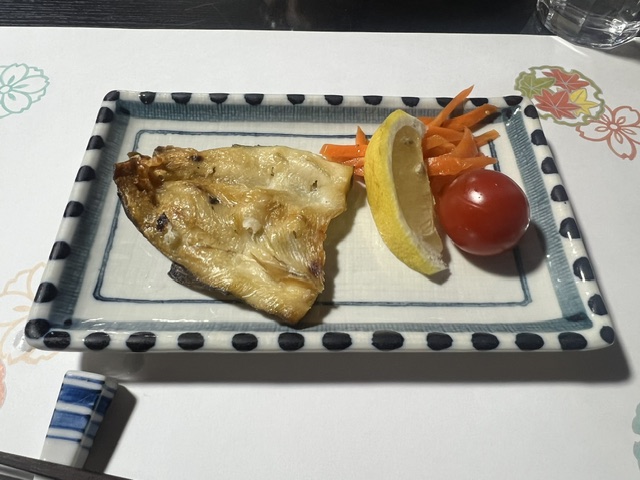
So the Nagazara and Kobathi were already on the table, and after we finished those they brought each following course. Fish, Taro Ball, Tempura, and then rice and miso soup–they asked if we were still hungry for it, and we were.

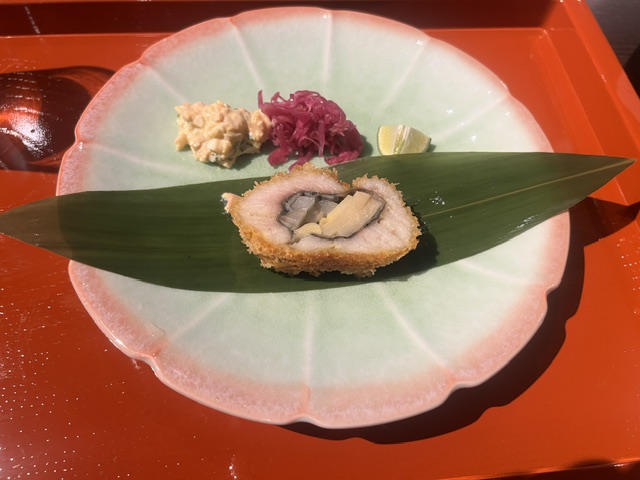
This was the best tempura we had in all of Japan, not just so far on our trip. We didn’t know it at the time, though we suspected.

Some fruit. I’m not sure if there were more pieces and I forgot to take the picture earlier, ha!

And green tea ice cream. The owner told us that this was a special treat for Really Rural Japan folks, lucky us! The whole meal was so delicious, everything we ate was delicious, though especially the tempura, plus all the little dishes at the beginning. Just phenomonal. We were so happy to be there, and so happy to be at the start of a 5 day walking tour!

How were my feet? Okay…they didn’t feel too terrible at this time, though my soles were tired by the end of the day. I had wrapped them in these specific blister bandages I’d bought in Nagoya, and it was working okay at this time.

After dinner, there was absolutely nothing to do, but that was okay as we were exhausted and breakfast was at 7, so we just went to bed.

I’ll leave you there, but I promise I’ll be back soon with another day of our trip!